
17 Pixie Wolf Cut Ideas for Women Who Want It Really Short
A pixie wolf cut is what happens when the wolf cut runs out of hair and keeps going anyway. The layers on top are cropped and choppy, the crown stands up on its own, the sides are short, and the nape keeps a wispy tail that separates it from a regular pixie. That tail is the whole point. Without it you have a textured pixie. With it you have a cut that has been climbing search results all year. Fine hair takes it well because there is nothing long enough to drag flat, and thick hair takes it as long as the stylist removes weight through the top. Expect a trim every four to five weeks, because on a cut this short a grown-out tail is obvious quickly.
Classic Pixie Wolf Cut

The standard version, and the one to show your stylist as a starting point. The sides and back are tapered short, the top is cut in choppy, uneven layers that sit forward and up, and a soft tail is left at the nape, an inch or two longer than the rest. Rub a little paste through your palms, push the top back and forward in different directions, and let the tail sit flat. It takes two minutes in the morning.
Pixie Wolf Cut with Curtain Bangs

Curtain bangs on a pixie wolf are cut long enough to graze the cheekbones and parted down the center, then blended into the short layers at the temples. They soften the crop and give the front some movement while the back stays tight and short. Blow dry the bangs away from the face with a small round brush. The rest of the cut can air dry. It is the most wearable way to have both bangs and a very short cut.
Wavy Pixie Wolf Cut
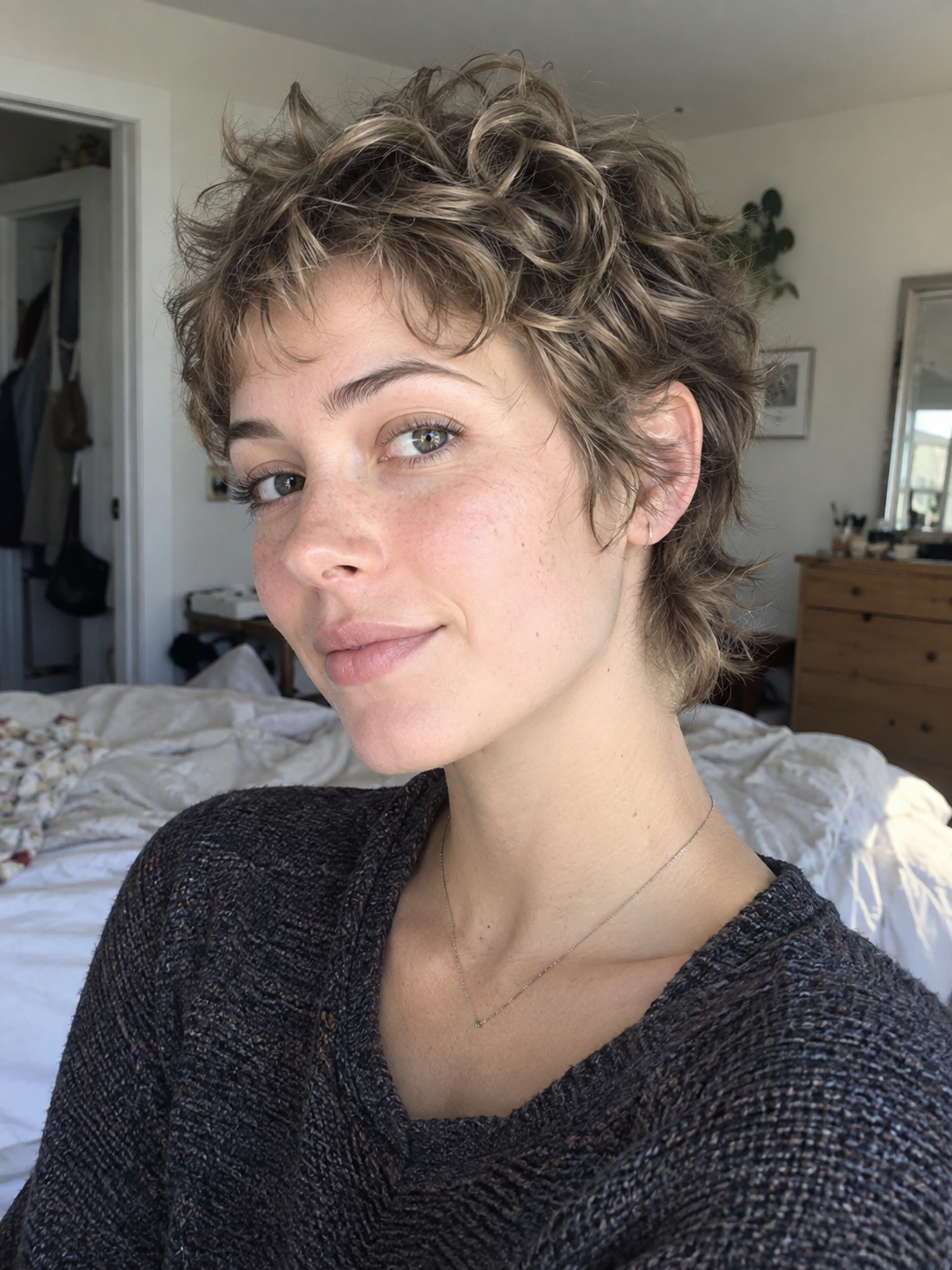
Natural wave turns the choppy top of a pixie wolf into a lift of separated pieces. The layers are point cut so each wave stands on its own, and the crown is the shortest section so it has room to rise. Scrunch a sea salt spray into damp hair and let it air dry without touching it. The nape tail waves too, which makes the shape look more deliberate. Short and messy, exactly as it should be.
Pixie Wolf Cut with Wispy Bangs
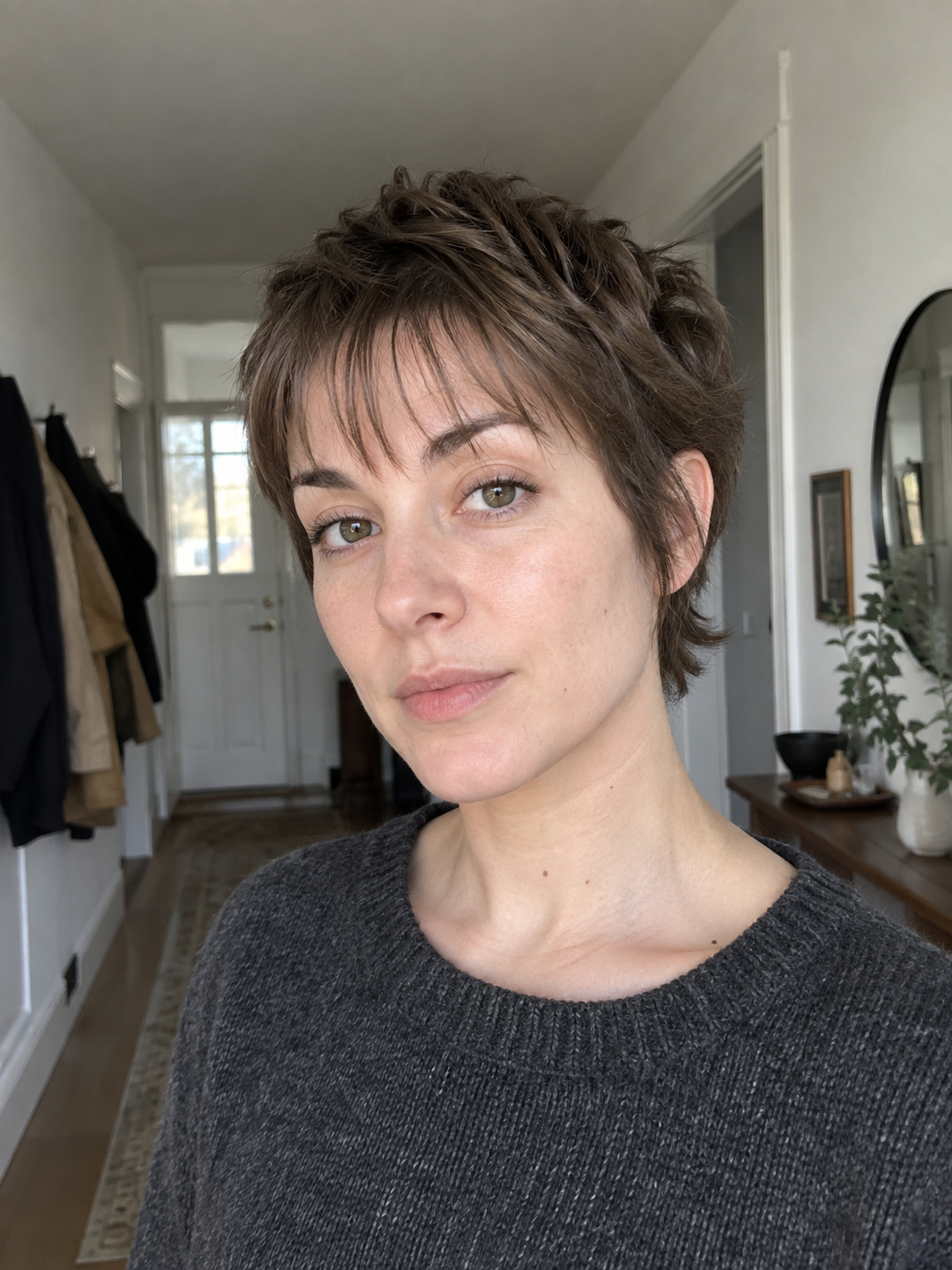
Soft, see-through bangs falling straight down give the pixie wolf a softer, more feminine front. The bangs are cut thin enough to show the forehead through them and land just above the brows. Behind them, the top is cropped and textured and the tail at the nape is kept soft rather than sharp. Dry the bangs with a flat brush and leave the rest. This is the version to try if you want short but not severe.
Straight Pixie Wolf Cut

Straight hair shows every layer of a pixie wolf clearly, so the ends need to be cut with a razor or deep point cutting to look piecey rather than blunt. The top sits forward in sharp, separated pieces, the sides are short and clean, and the tail is thin and defined at the neck. A dry texture spray gives the pieces grip. It has an edge that the wavy version does not, and it suits strong, angular features.
Curly Pixie Wolf Cut

Curls on a pixie wolf are cut dry, curl by curl, with the tightest ringlets cropped at the crown and the front curls left a little longer around the temples. The tail at the nape is a few looser curls. Apply a curl cream and a light gel to wet hair, diffuse, and fluff the crown for height. The curls fill the layers so nothing looks patchy. Keep the overall length above the ears so it stays clearly a pixie.
Pixie Wolf Cut with Micro Bangs
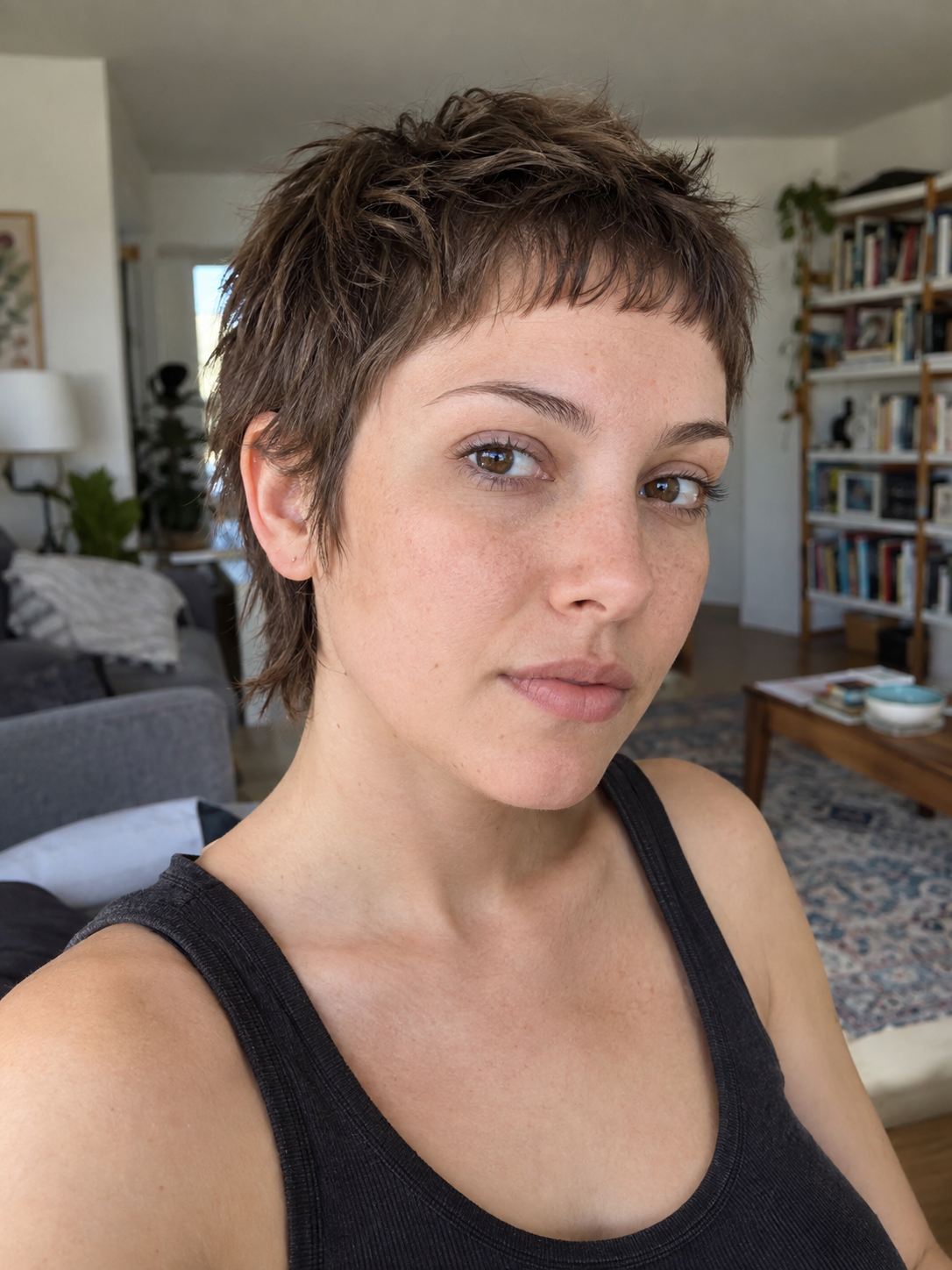
Micro bangs cut an inch or more above the brows give the pixie wolf a punk, almost French New Wave feel. They are cut choppy so they match the texture behind them. The rest of the top is short and pushed up, and the nape tail is small and deliberate. This exposes the whole face, so it suits strong features and a confident personality. Style the bangs with a little pomade and leave the rest textured.
Undercut Pixie Wolf Cut
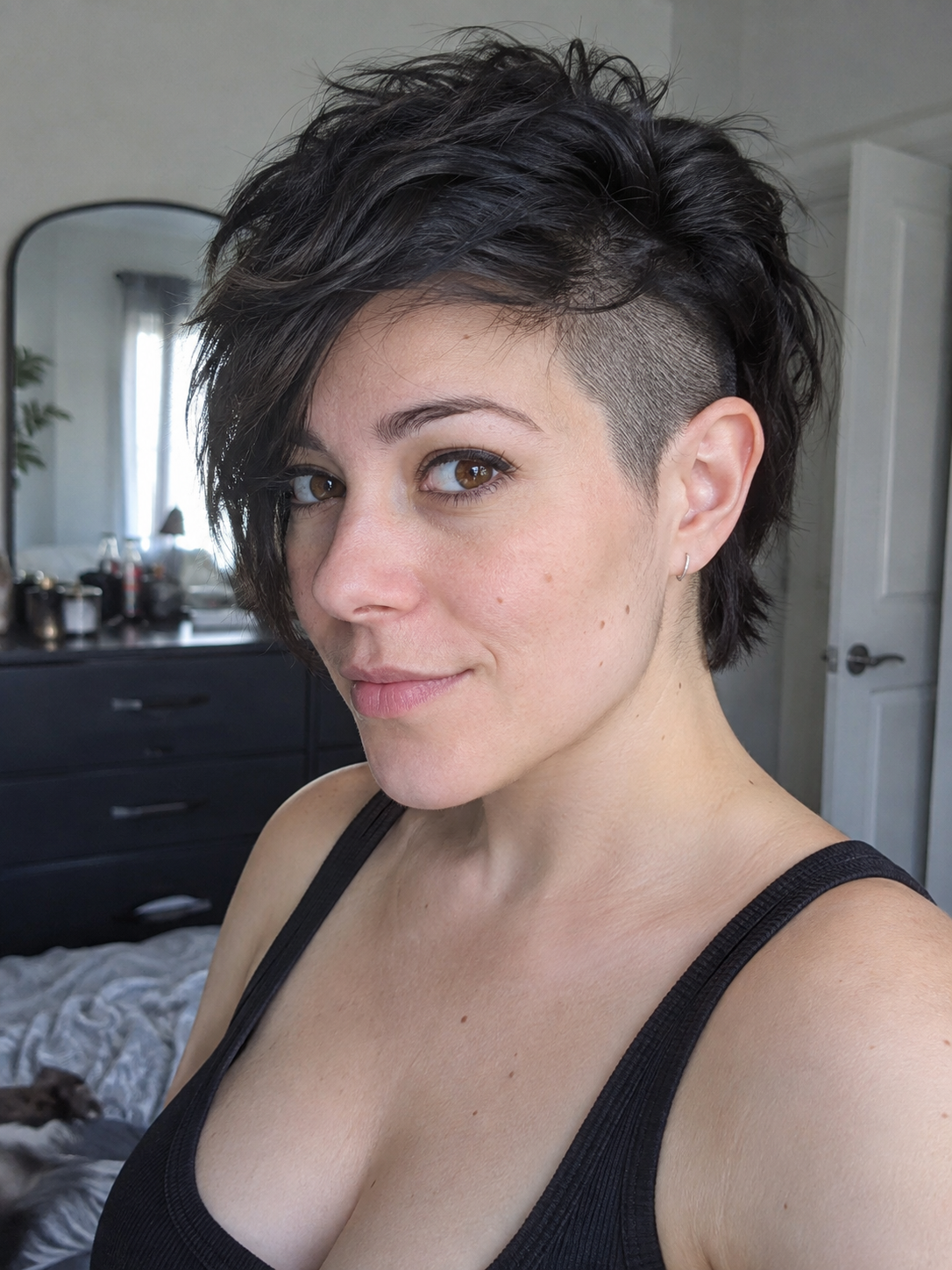
Shaving the sides and nape underneath gives the pixie wolf a clean, graphic edge. The top stays long enough to fall over the shaved sides in choppy layers, and the tail hangs below the shaved line at the back. When the top is pushed forward, the undercut hides. Pushed back or tucked, it shows. It removes bulk on thick hair and needs a tidy-up every three weeks to stay sharp.
Long-Tail Pixie Wolf Cut

Here the tail takes over. The crown and sides are cropped very short, and the nape tail is left wispy and long enough to reach the base of the neck or slightly below. It is the version that leans furthest into the mullet family while the front still says pixie. The tail should be razor cut so it stays thin and does not look like a solid block. Air dry the tail, style the top up with paste.
Soft Pixie Wolf Cut for Fine Hair

On fine hair, heavy layering can leave gaps, so this version keeps the layers blended and the tail short and light. The top is textured but not choppy, the sides taper softly, and the nape is only slightly longer than the rest. A volumizing mousse on damp hair and a quick blast with a dryer, fingers pushing the top up, gives it fullness. It reads as a pixie with a little extra personality at the back.
Side-Swept Pixie Wolf Cut
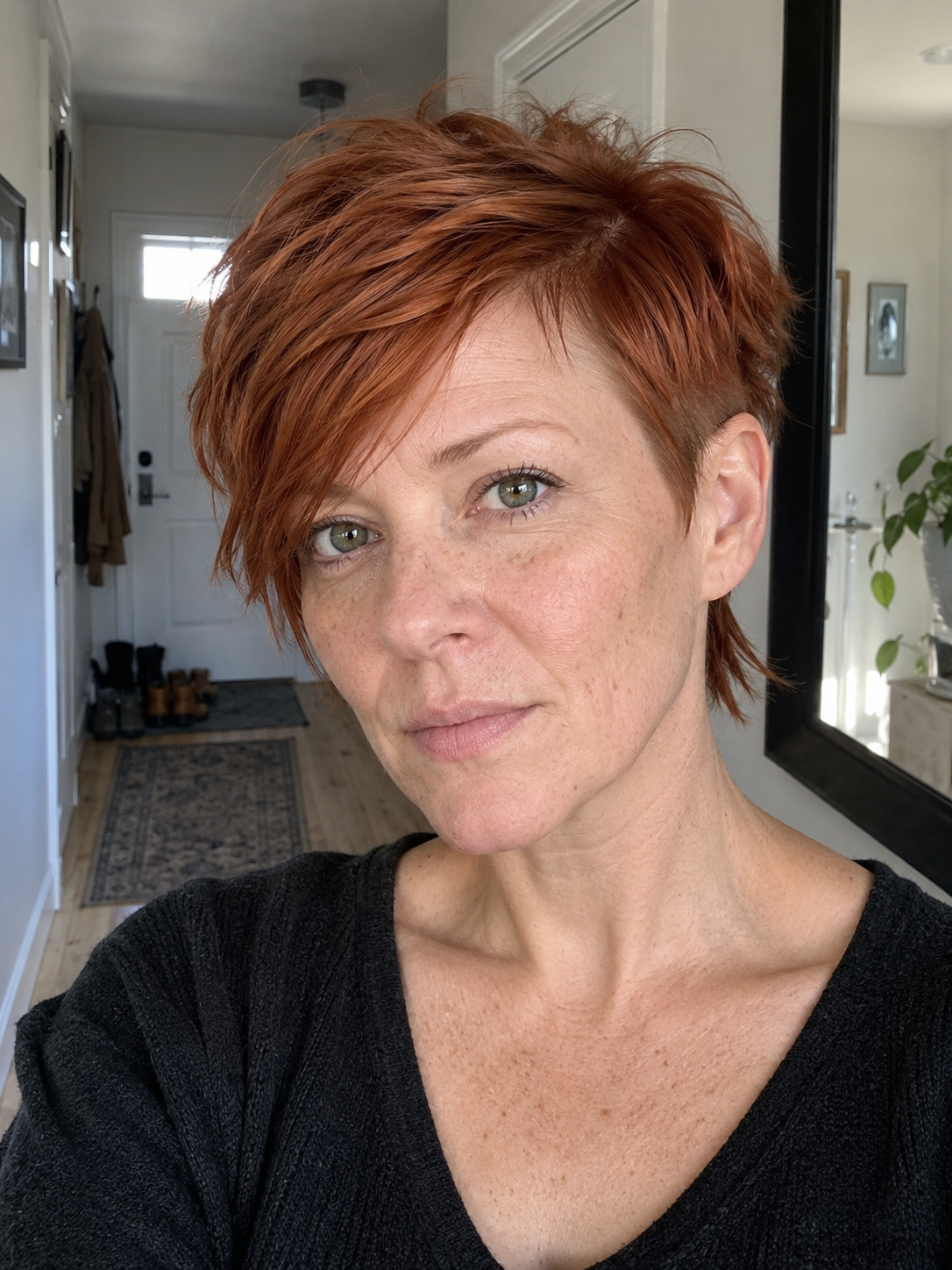
A deep side part sends the choppy top layers sweeping across the forehead in one direction, and the short side is tucked or cropped close. The tail at the nape stays short. It covers a bit of forehead without bangs and gives the cut an asymmetric feel. Blow dry the top in the opposite direction first, then flip it across for lift at the part. It works on straight or slightly wavy hair.
Spiky Textured Pixie Wolf Cut
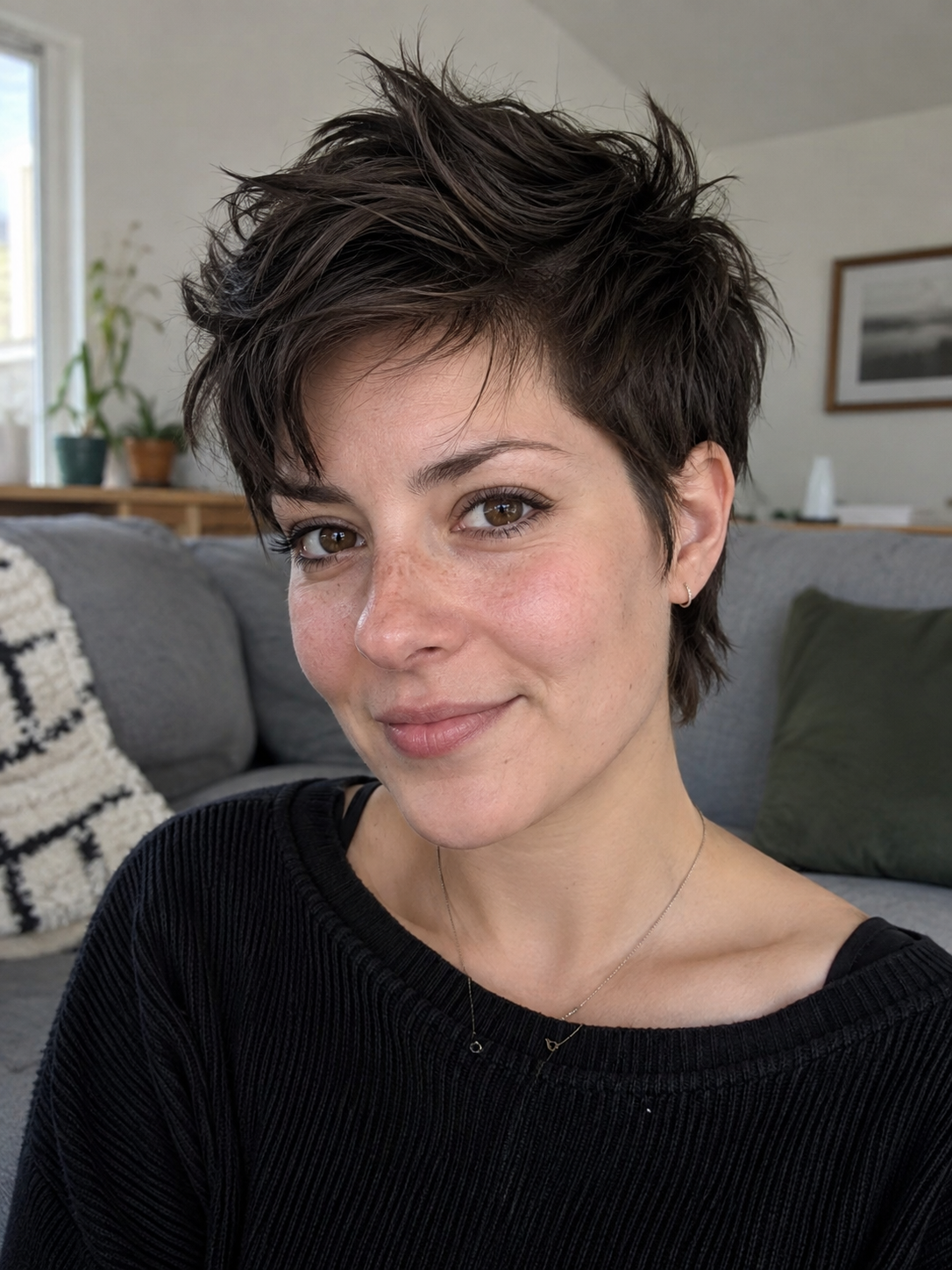
This one leans into product. The top is cropped short and styled into separated, upward pieces with a strong-hold paste, so the choppy layers stand in different directions. The sides are tight, and the nape tail is left soft against the neck as a contrast to the spiky top. It is a nineties, rock-leaning finish. Warm the paste between your palms, work it in at the roots, and pull pieces up with your fingertips.
Coily Pixie Wolf Cut
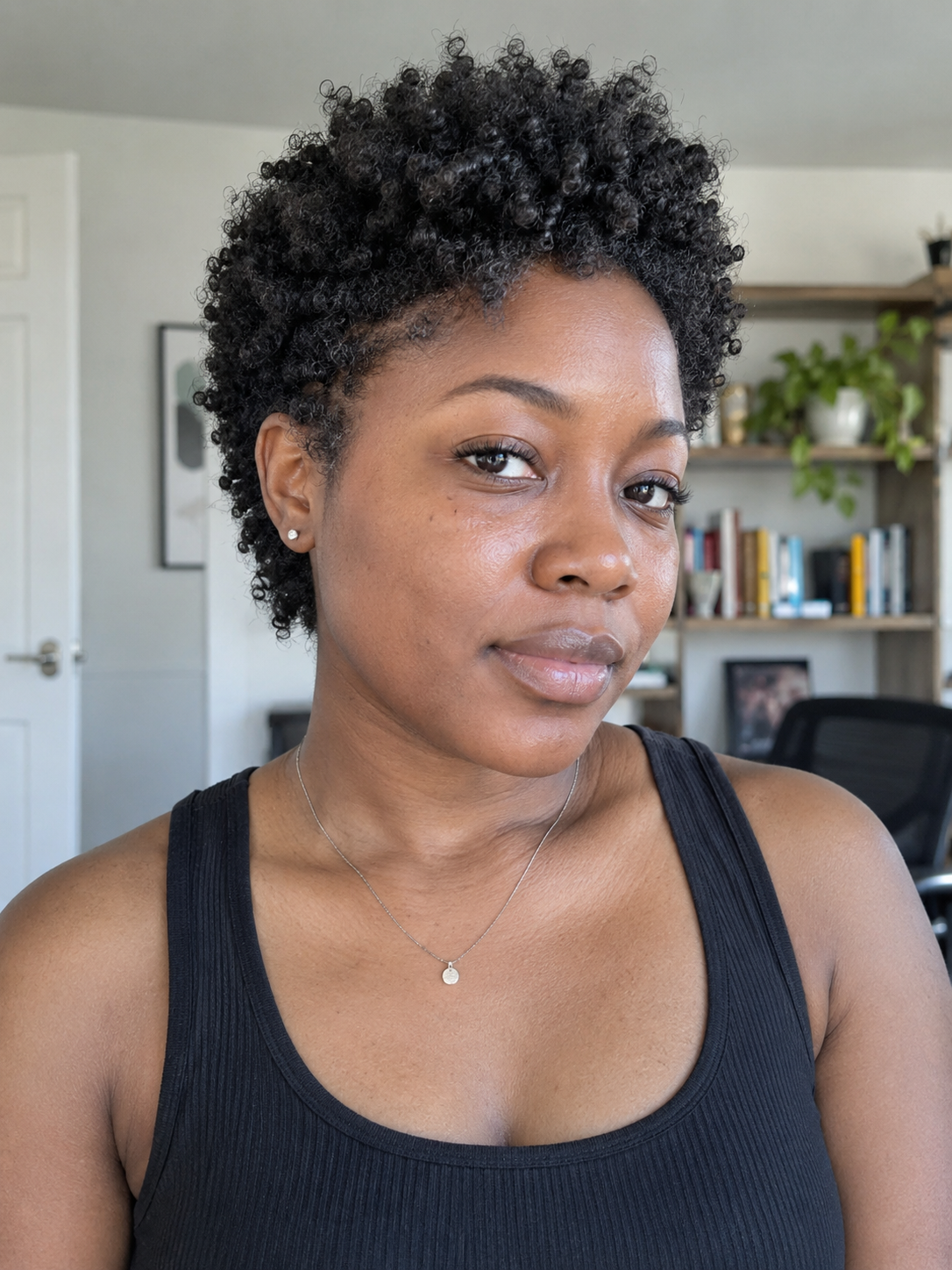
For Black women with coily natural hair, the pixie wolf is shaped with the crown cropped and picked out for height, the sides cut short, and a small, soft tail at the nape left slightly longer and picked out too. Define the coils on top with a leave-in and a light gel, then lift at the roots with a pick. It is a fresh variation on a tapered cut, with the tail doing the wolf work at the back.
Platinum Pixie Wolf Cut with Dark Roots
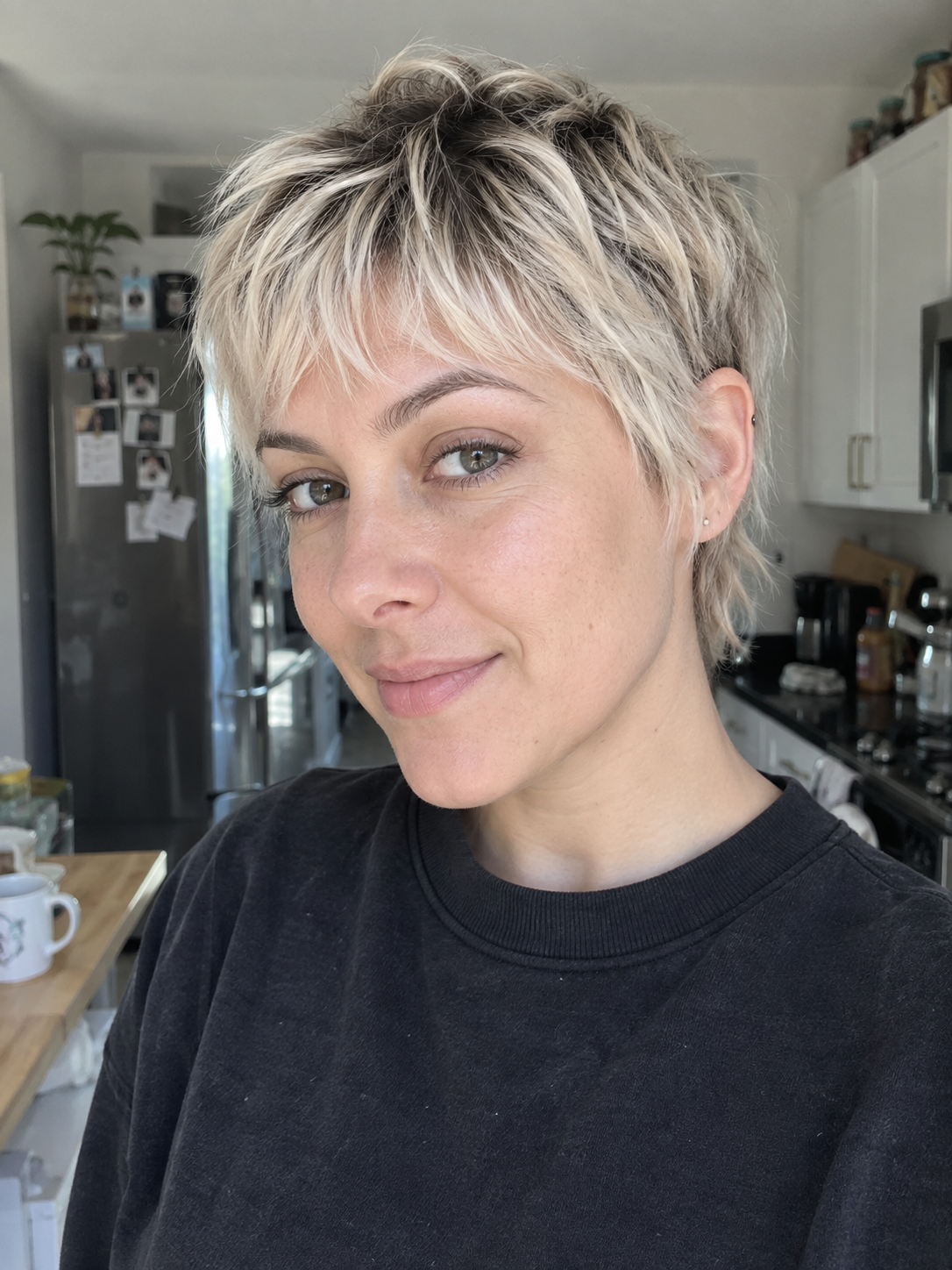
Bleaching a pixie wolf to platinum and leaving a shadow of dark roots at the crown shows off the layers, because the light ends stand out against the darker base underneath. The contrast makes the choppy top look even more piecey. Honesty here: platinum is high-commitment even on short hair, and it needs a purple shampoo weekly and a toner every six weeks. On the upside, the regrowth becomes part of the look.
Money-Piece Pixie Wolf Cut
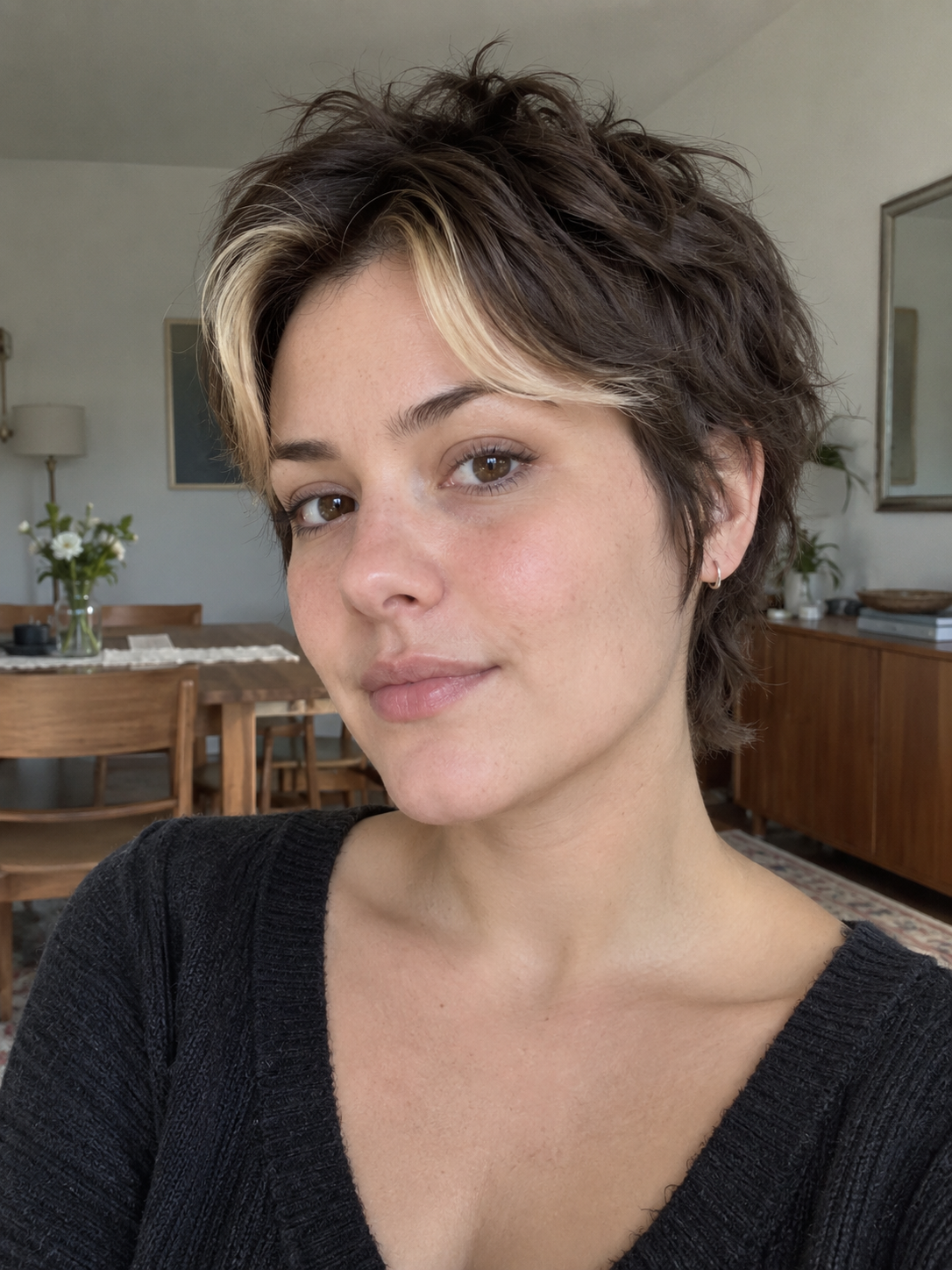
Two bright pieces at the very front, a few shades lighter than the rest, give the pixie wolf a focal point. The lighter pieces sit where the layers are shortest, so they lift and separate from the darker top. It works in blonde on brown, copper on dark brown, or silver on black. The rest of the cut stays natural. Because the bleached section is small, upkeep is a quick touch-up every eight weeks or so.
Slicked-Back Pixie Wolf Cut
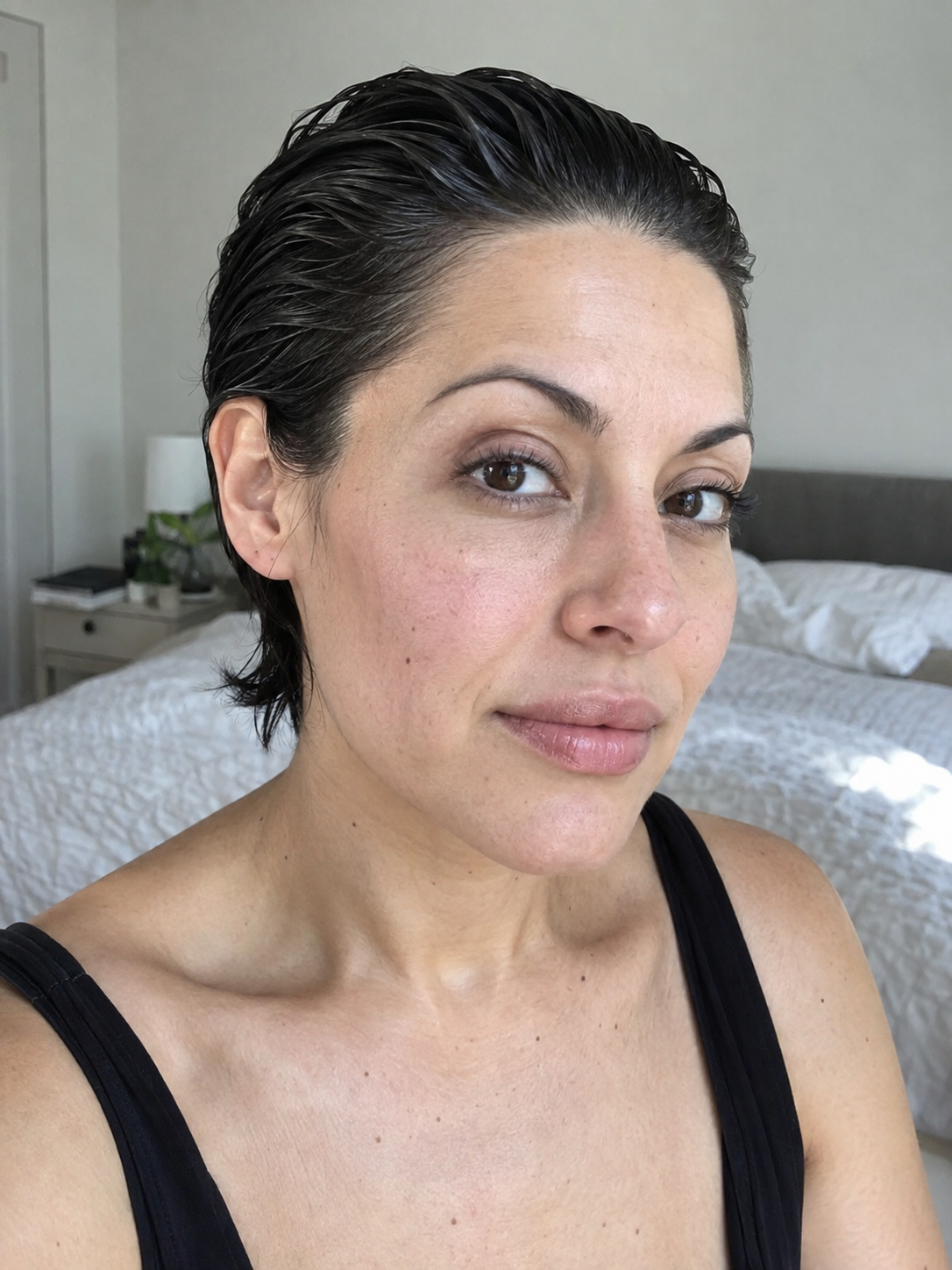
Combing the top back with a wet-look gel flattens the choppy layers into a sleek shape and leaves the tail loose at the nape, which shows the cut's structure in a different way. The sides tuck behind the ears. It turns the everyday textured look into something sharp for an evening out. Comb the gel through damp hair straight back from the hairline and do not touch it while it sets.
Long Pixie Wolf Cut

The longest version still sits well within pixie territory, with the top layers reaching the tops of the ears and the tail extending an inch or so below the nape. It is the pixie wolf for anyone growing out a shorter crop or easing in from a bob. The extra length on top allows a bit more movement and can be tucked behind the ears. Style with a light cream and let it air dry.



Comments
No Comments