
14 Pixie Cuts That Make Fine Thin Hair Over 60 Look Fuller
Fine hair has one real advantage after sixty: it looks its fullest short. Long lengths pull thin strands flat, but a pixie lets the hair stand on its own, and the crown, which is where thinning shows first, gets all the attention. The trick is restraint. Soft texture on top, a clean tapered edge, and not too many layers, because over-layered fine hair shows scalp. Every cut below follows that rule.
Feathered Tapered Pixie
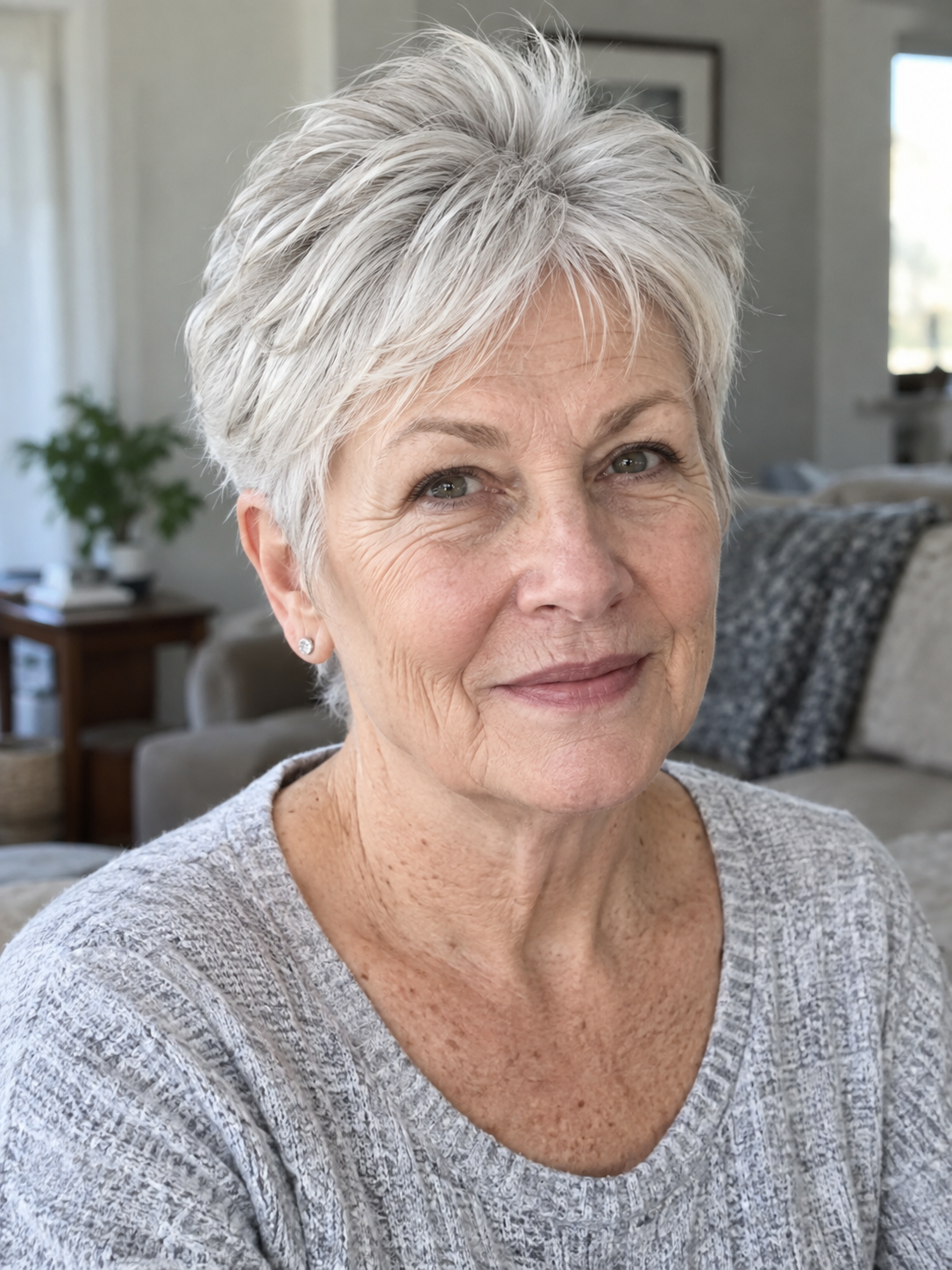
This is the cut stylists recommend first for fine hair over sixty, and for good reason. The sides and nape are tapered close, and the top is cut in soft, feathered layers that lift at the crown without being choppy. The taper keeps the shape neat so the fullness on top stands out. Rub a little texturizing cream through damp hair, blow dry the top up and back with your fingers, and it holds all day.
Long Pixie with Side-Swept Bangs
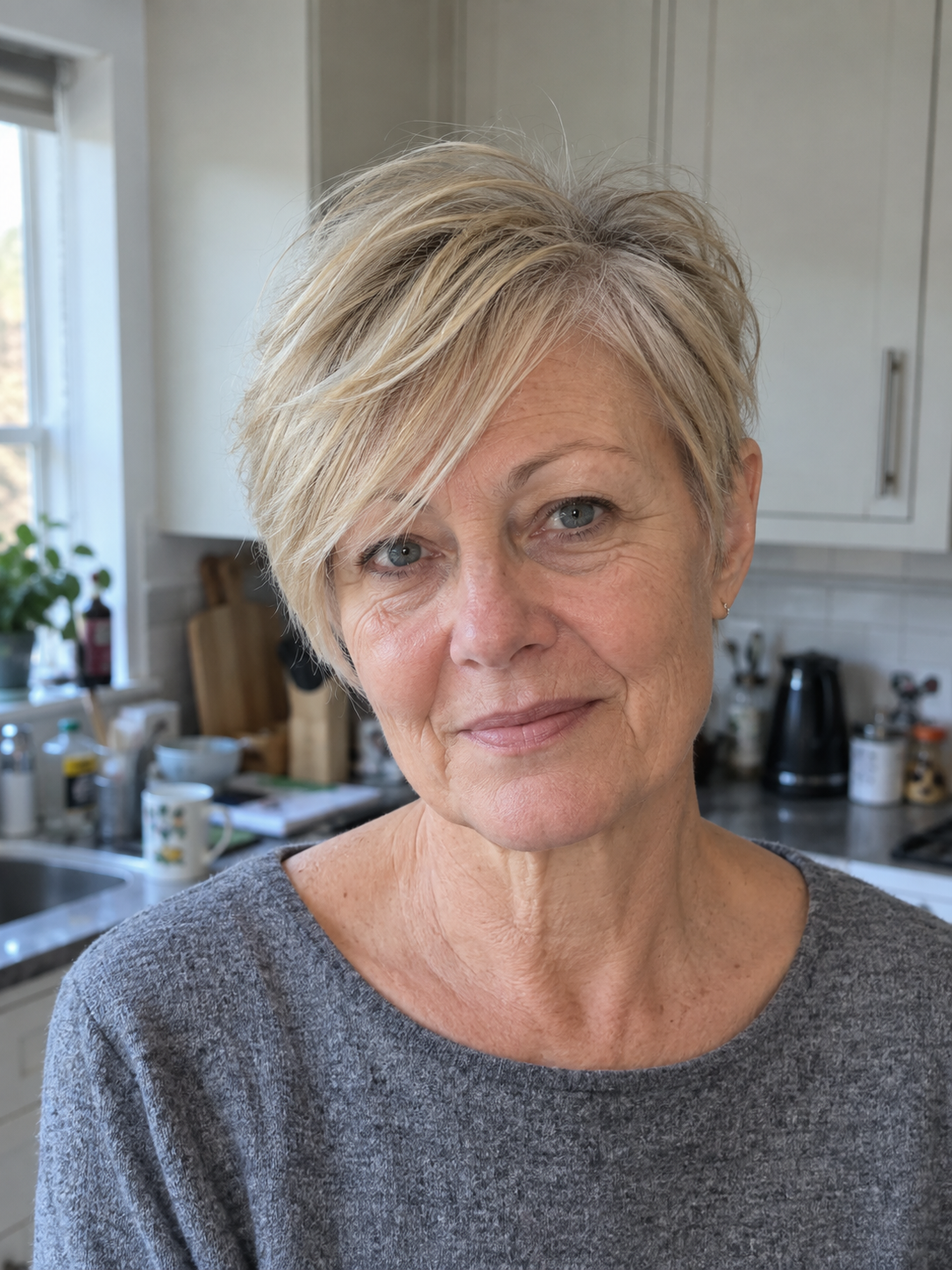
Keeping some length at the front is the gentlest way into a pixie if you are coming from a bob. The top and fringe are left long enough to sweep across the forehead at a diagonal, while the back and sides are cut short. The sweep covers a receding hairline and gives the front some movement. Blow dry the fringe in the opposite direction first, then flip it across for lift at the root.
Textured Pixie with Crown Lift
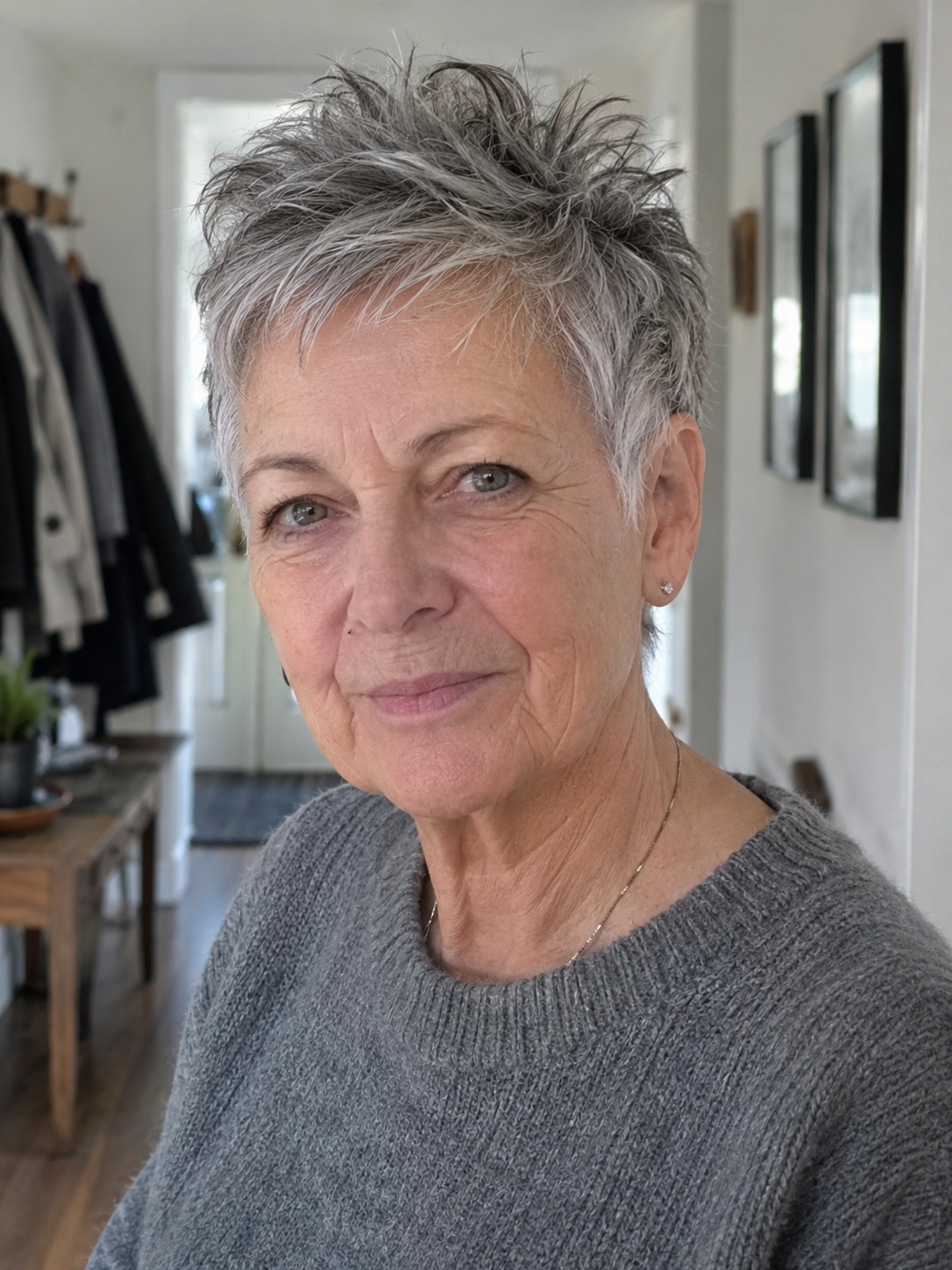
Here the whole point is height at the top of the head. The crown section is cut slightly shorter than the front so it stands up, and the sides stay close. A root-lifting spray on damp hair, then a quick blow dry with the head tipped forward, makes fine hair look twice as full. Keep the layers soft rather than chopped. It makes the face look more awake, which is the kindest thing a haircut can do.
Pixie with Wispy Bangs
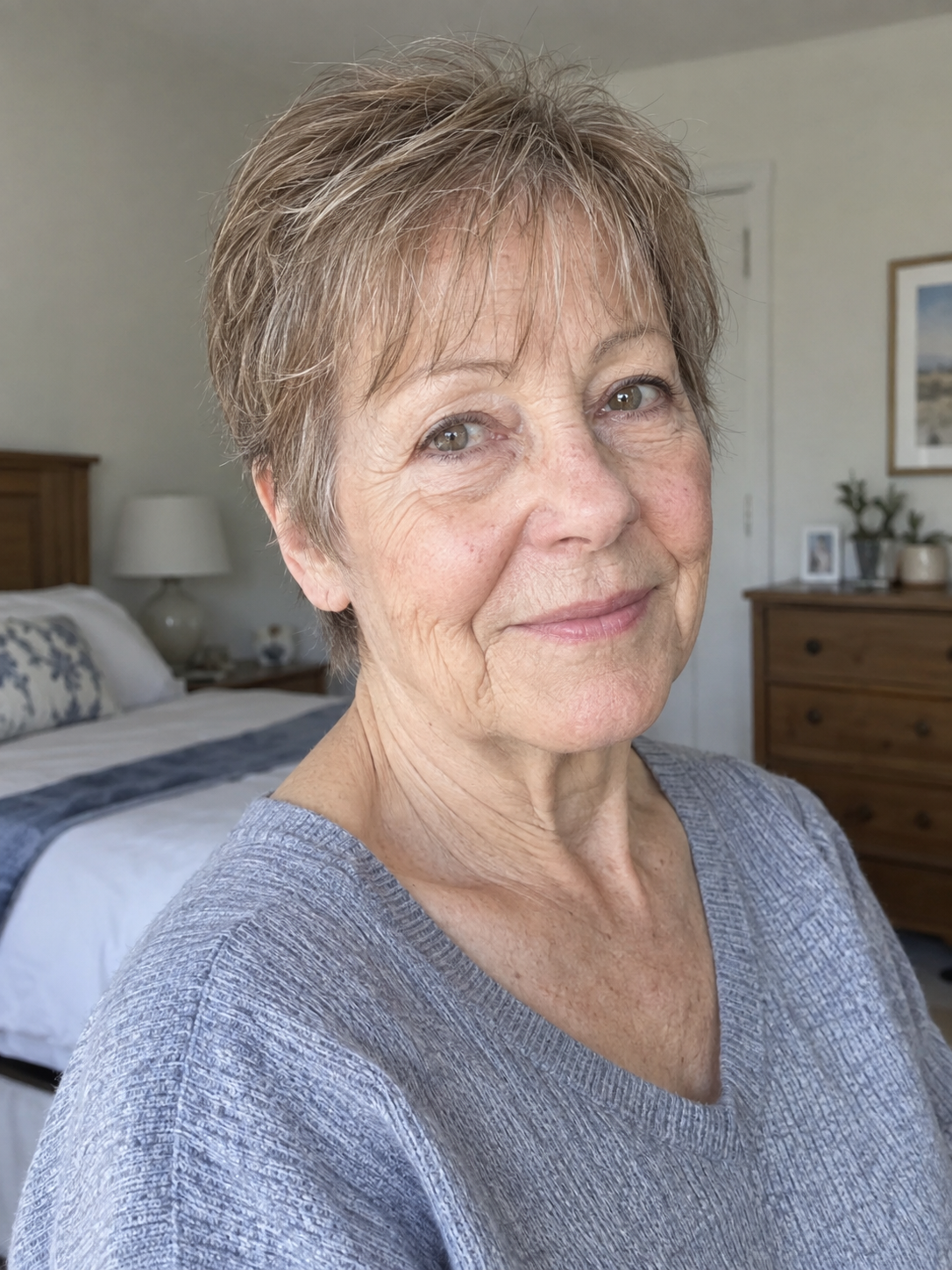
Thin, see-through bangs that fall just above the brows soften the forehead and pull attention to the eyes. On fine hair they should be cut from a shallow section so they stay light and do not steal density from the crown. The rest of the pixie is short and softly layered. Blow dry the bangs straight down with a flat brush and leave the rest to air dry with a little mousse.
Silver Cropped Pixie
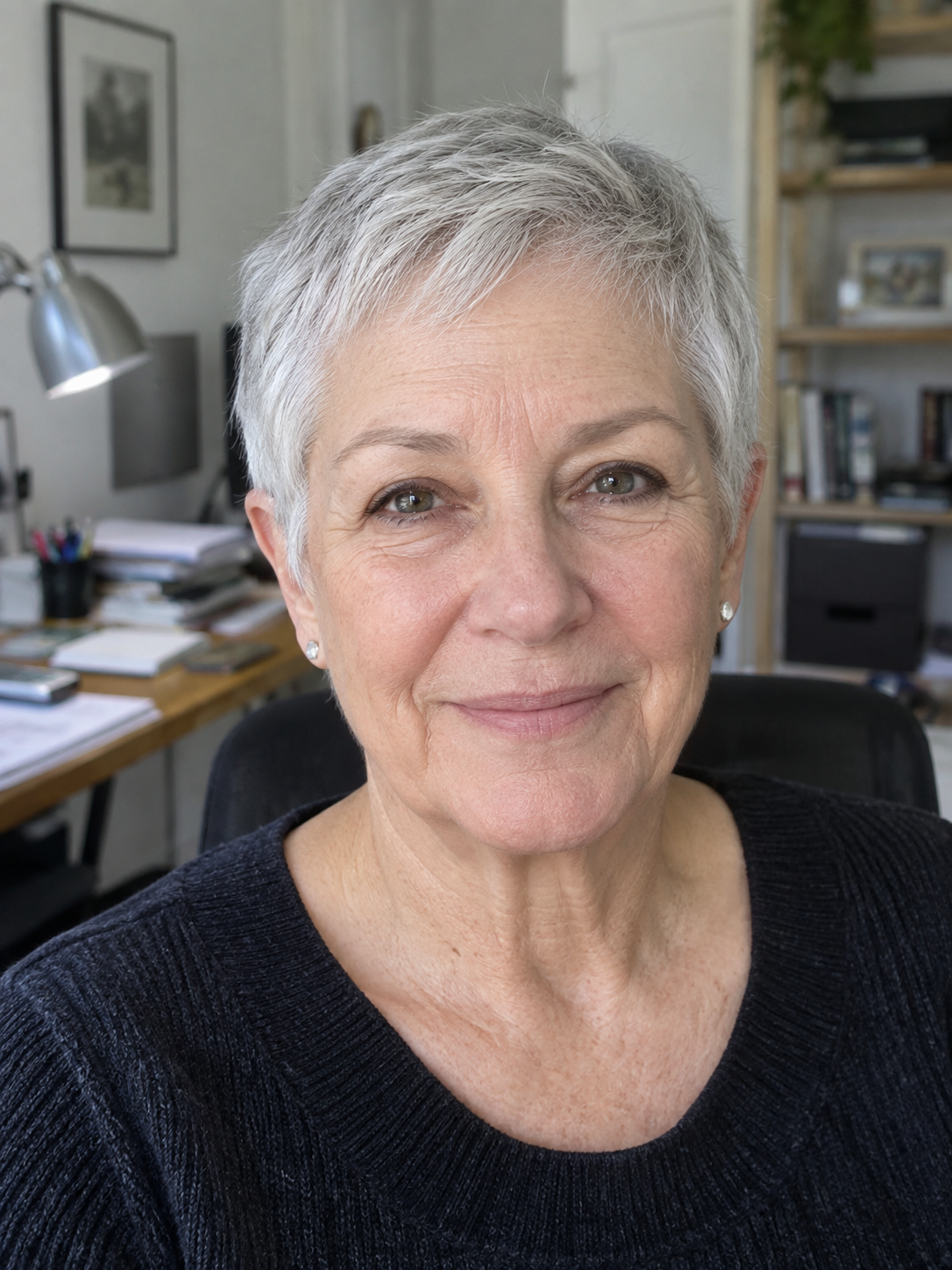
A close crop in natural silver or white is one of the most flattering pixies on this list, because gray hair has a slightly coarser texture that gives fine strands more grip and lift. The cut is short all over with a little softness at the front. A purple shampoo once a week keeps the silver bright, and a pea-sized bit of pomade adds shine. It needs a trim every four weeks to stay crisp.
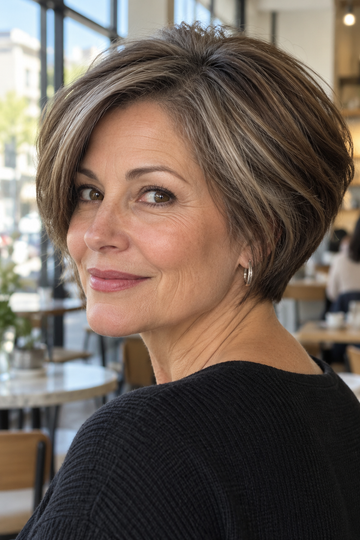
Bixie
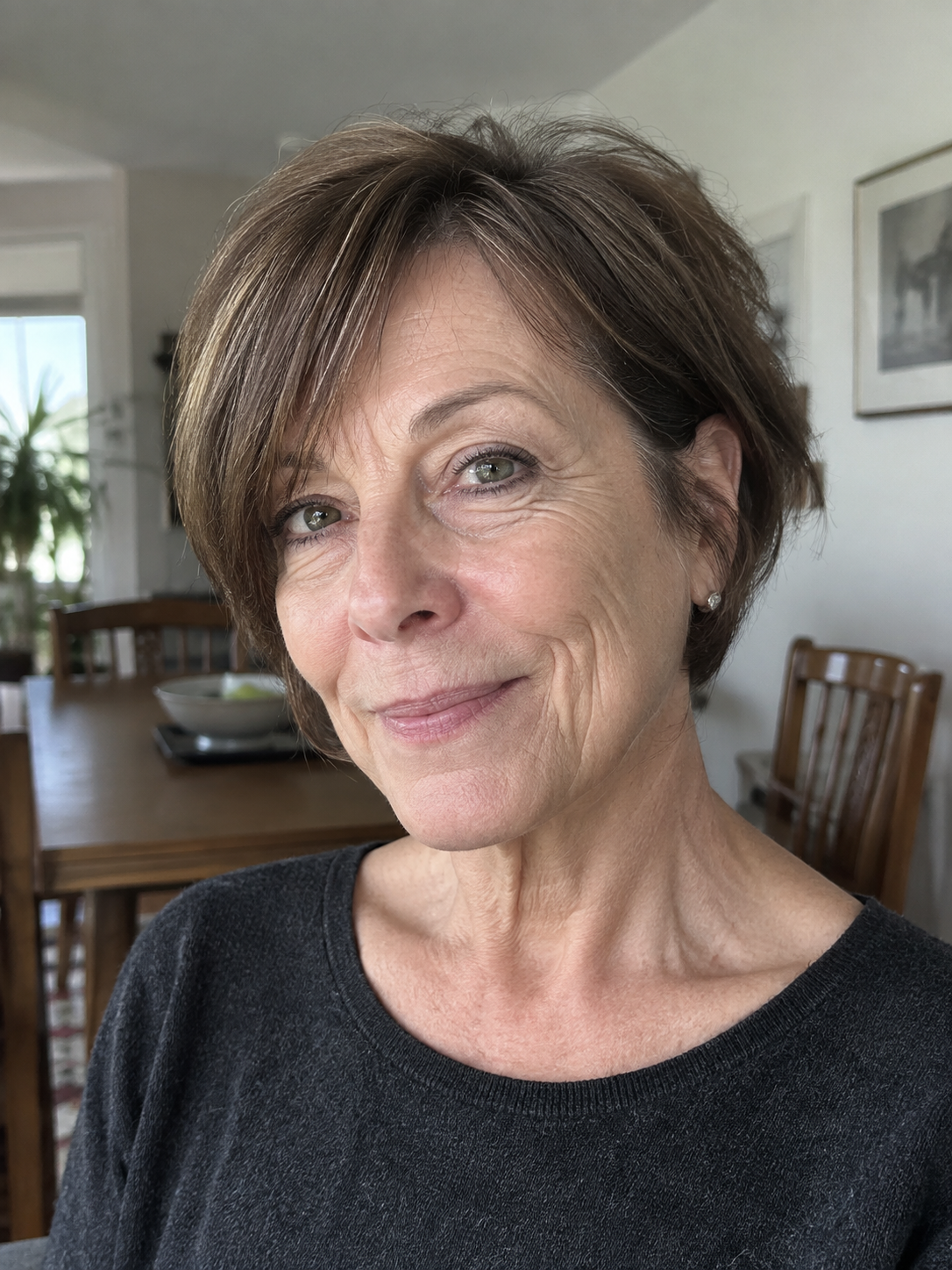
The bixie blends a pixie and a bob, with a bit of extra length at the front and around the ears, shorter at the nape, and soft blended layers throughout. It gives fine hair a rounded, full shape without heavy layering and can be tucked or worn forward. It also grows out smoothly, which makes it a good choice if you are still deciding how short you want to go.
Asymmetrical Pixie
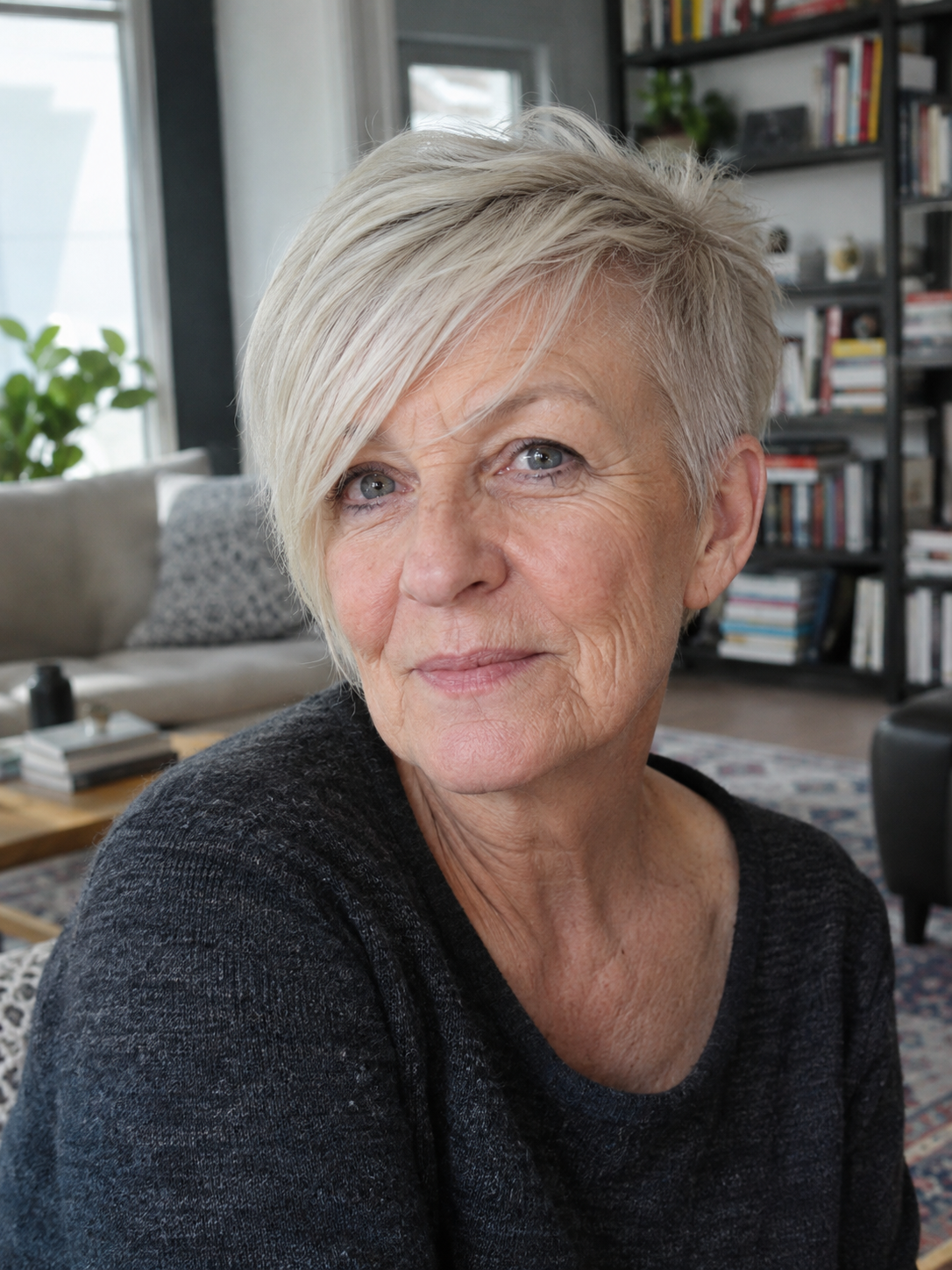
Pushing the length and movement to one side of the face disguises thinning at the hairline and frames the face on that side. One side is left longer and swept across the forehead, the other is cut close. It is a deliberate, modern shape that suits straight to slightly wavy hair. Blow dry the long side forward and smooth, and use a light wax to keep the shorter side flat.
Wavy Pixie
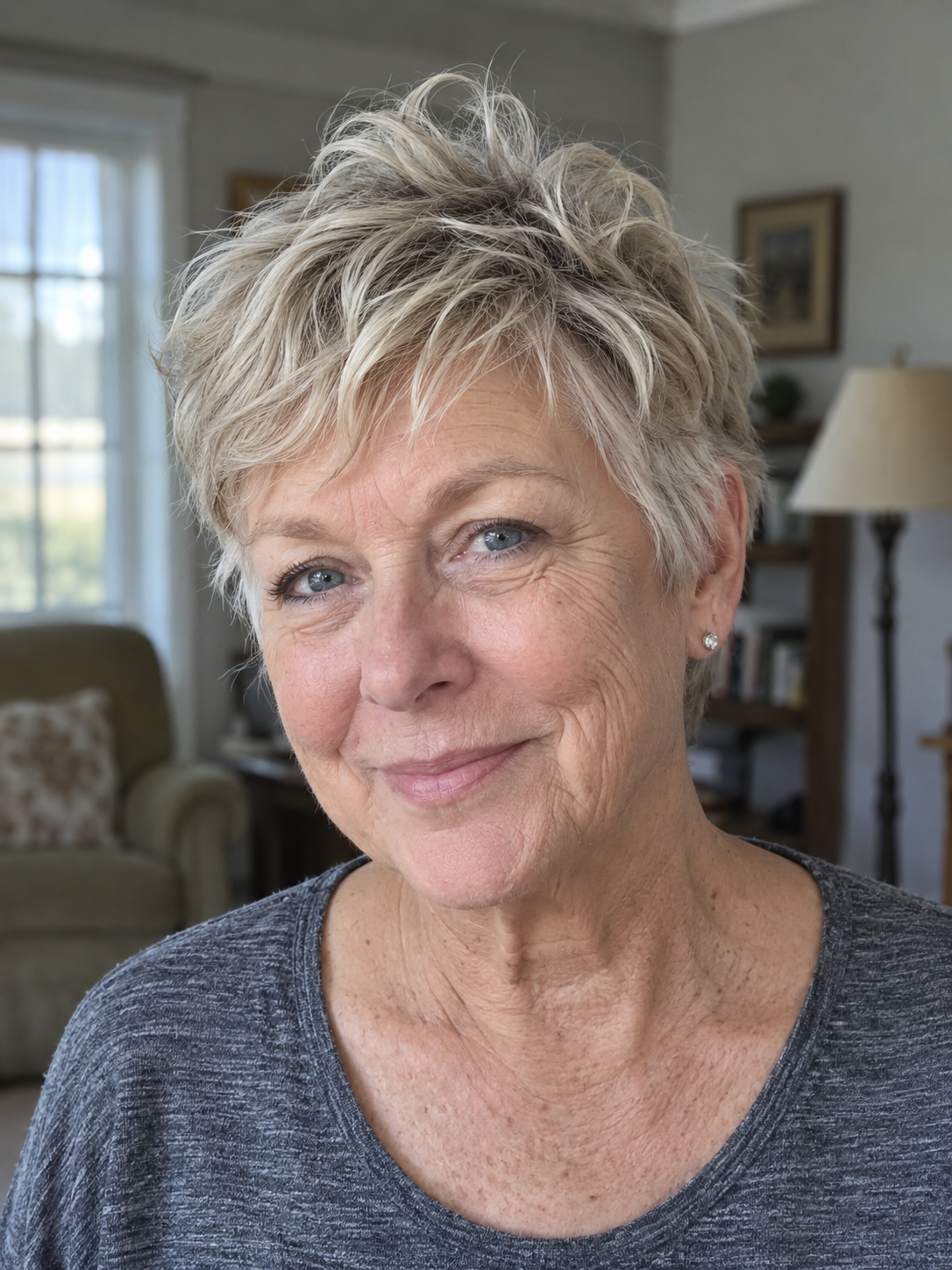
If your hair has any natural wave, a pixie cut to let it show gives fine hair texture and body without a blow dryer. The layers are point cut so each wave separates, and the crown is shortest so it can rise. Scrunch a sea salt or texture spray into damp hair and let it air dry. It is a relaxed, low-effort cut that looks fuller the messier it gets.
Curly Pixie
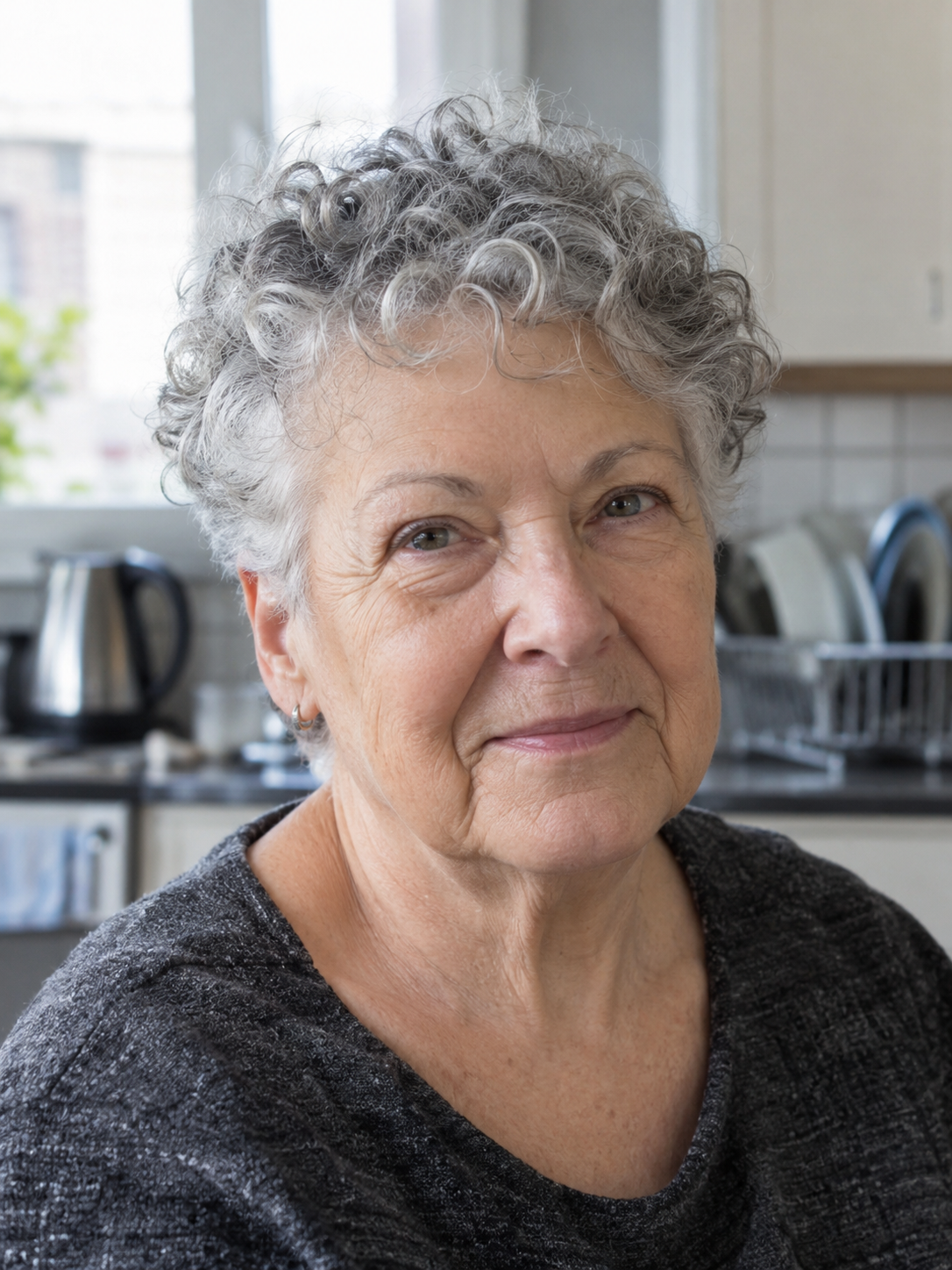
Natural curls cut into a pixie spring upward instead of hanging, which is exactly what fine, thinning hair needs. The cut is done dry, curl by curl, with the tightest curls at the crown and slightly longer ones at the front. A curl cream and a diffuser on low, then fluff the crown. Short curls hide sparse areas better than any other texture on this list.
Rounded Pixie
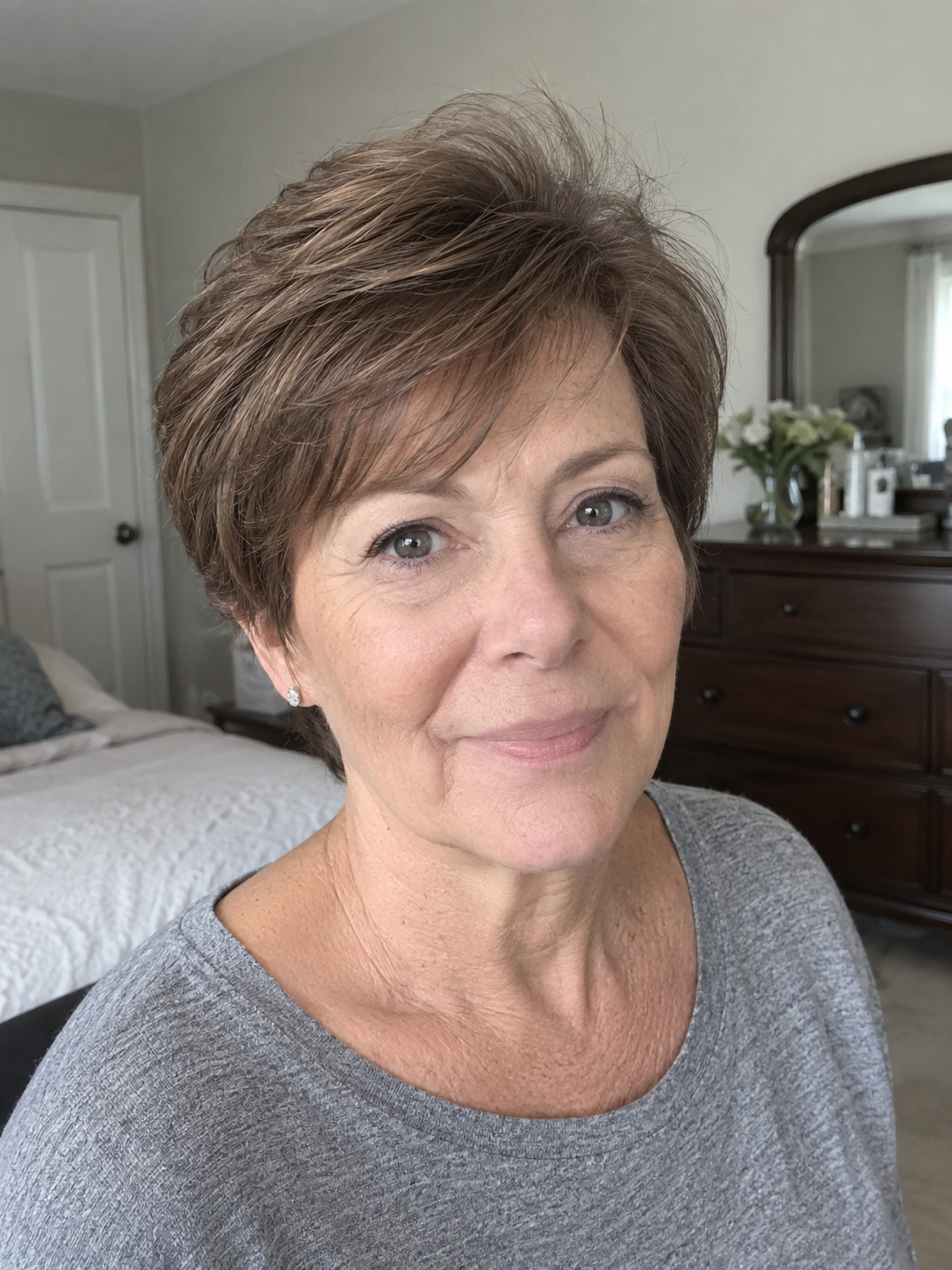
A softly rounded pixie, brushed into a smooth, full shape rather than textured, suits fine hair that is straight and does not hold texture well. The layers are blended evenly so the outline is round from every angle, with height at the crown and soft edges around the face. Blow dry with a small round brush, rolling the sections back. It is neat, classic, and easy to keep up between trims.
Forward-Brushed Pixie
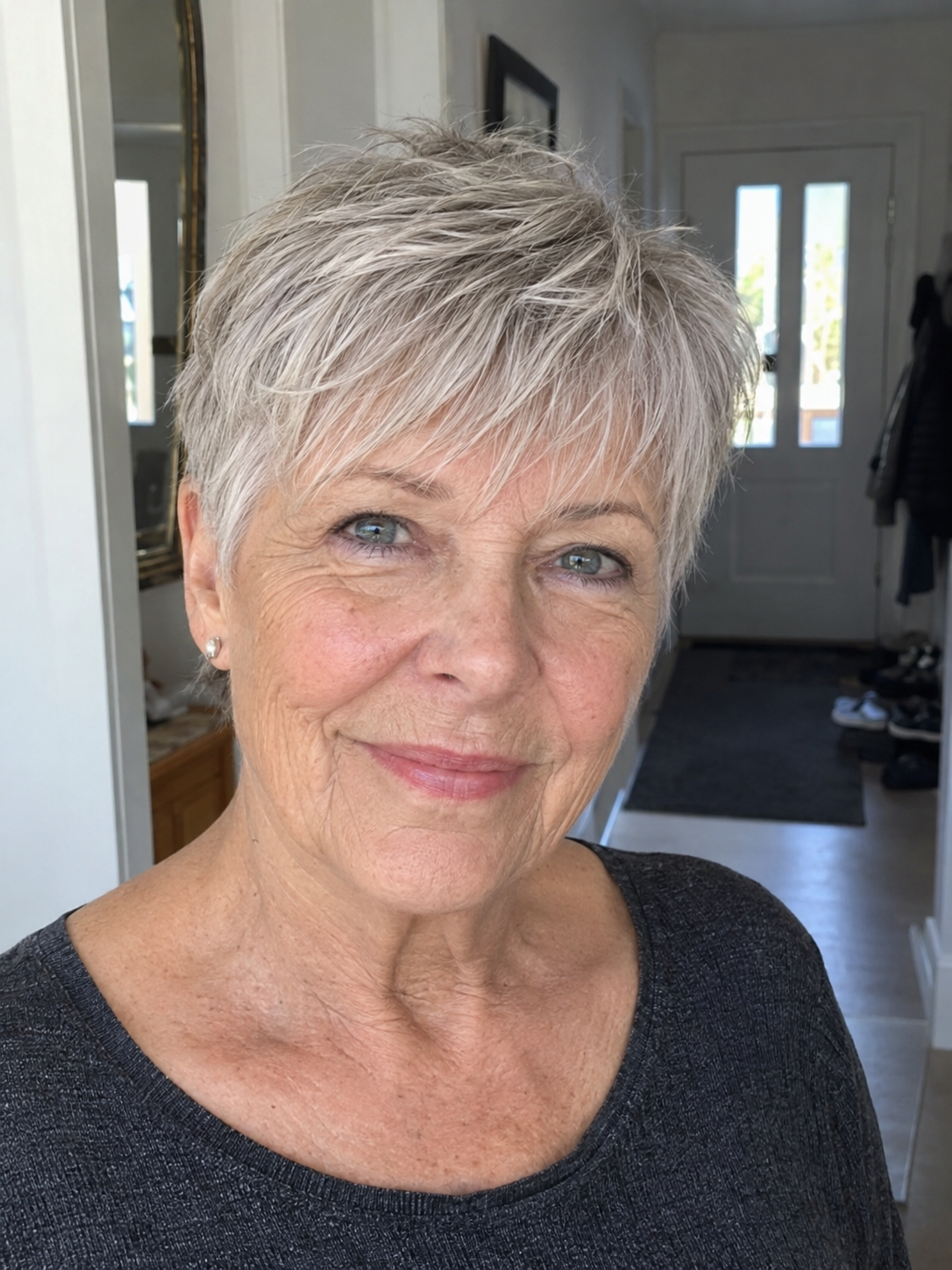
Brushing a pixie forward, with a short fringe and the crown pushed toward the face, gives fine hair a modern direction and makes the layers visible. It also covers a thinning hairline. The cut is short and evenly layered, and the styling is nothing more than a little cream and fingers pushing everything forward. It looks styled even if you skip the dryer entirely.
Short Natural Pixie
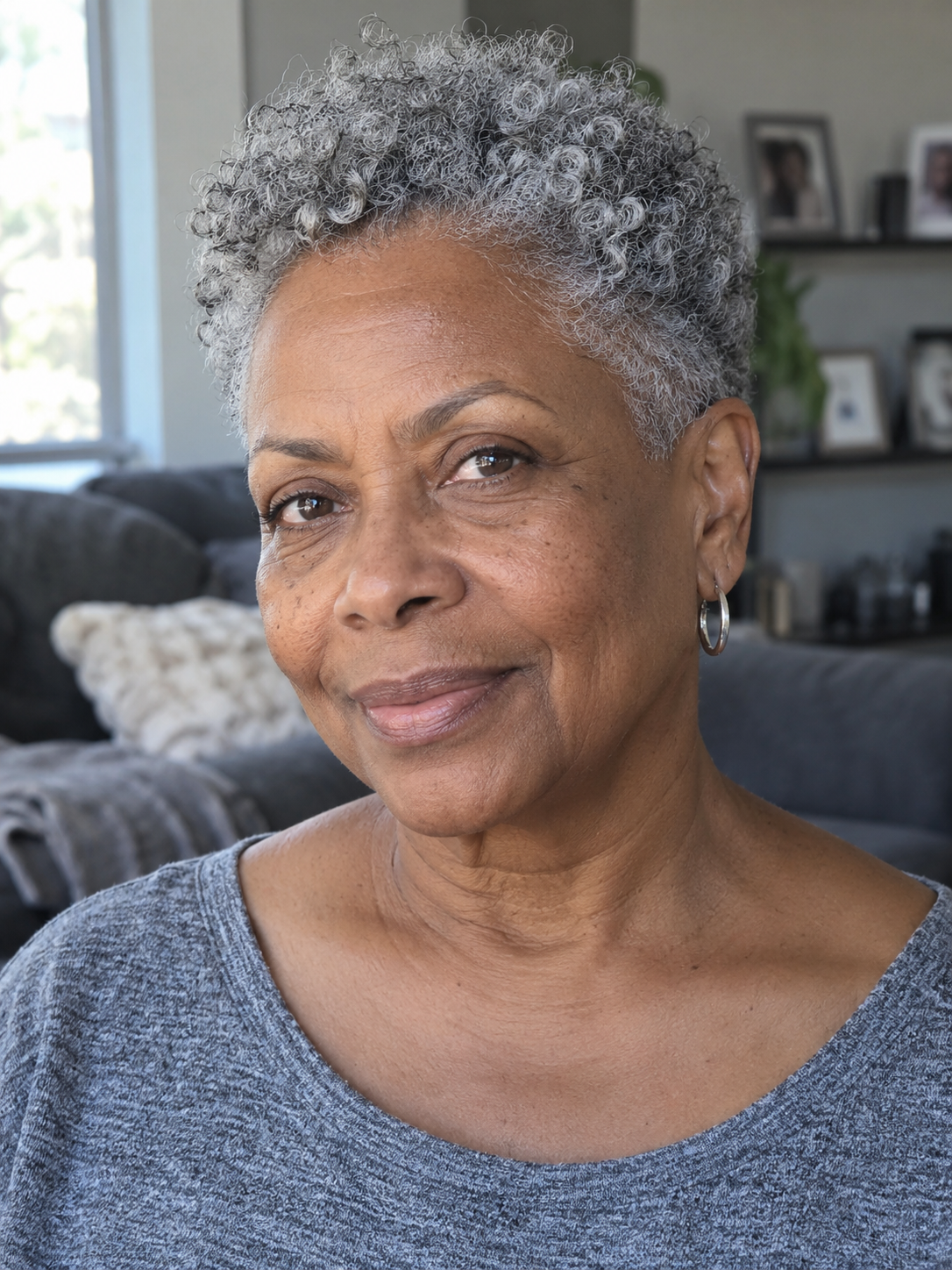
For Black women over sixty with fine natural hair, a short pixie shaped with a close taper at the sides and nape and a soft, rounded cluster of coils on top is a low-maintenance classic. The coils are defined with a leave-in and a light gel and picked out gently at the root for lift. Silver coils suit it especially well. Shaping every six weeks keeps it tidy.
Icy Blonde Pixie with Shadow Roots
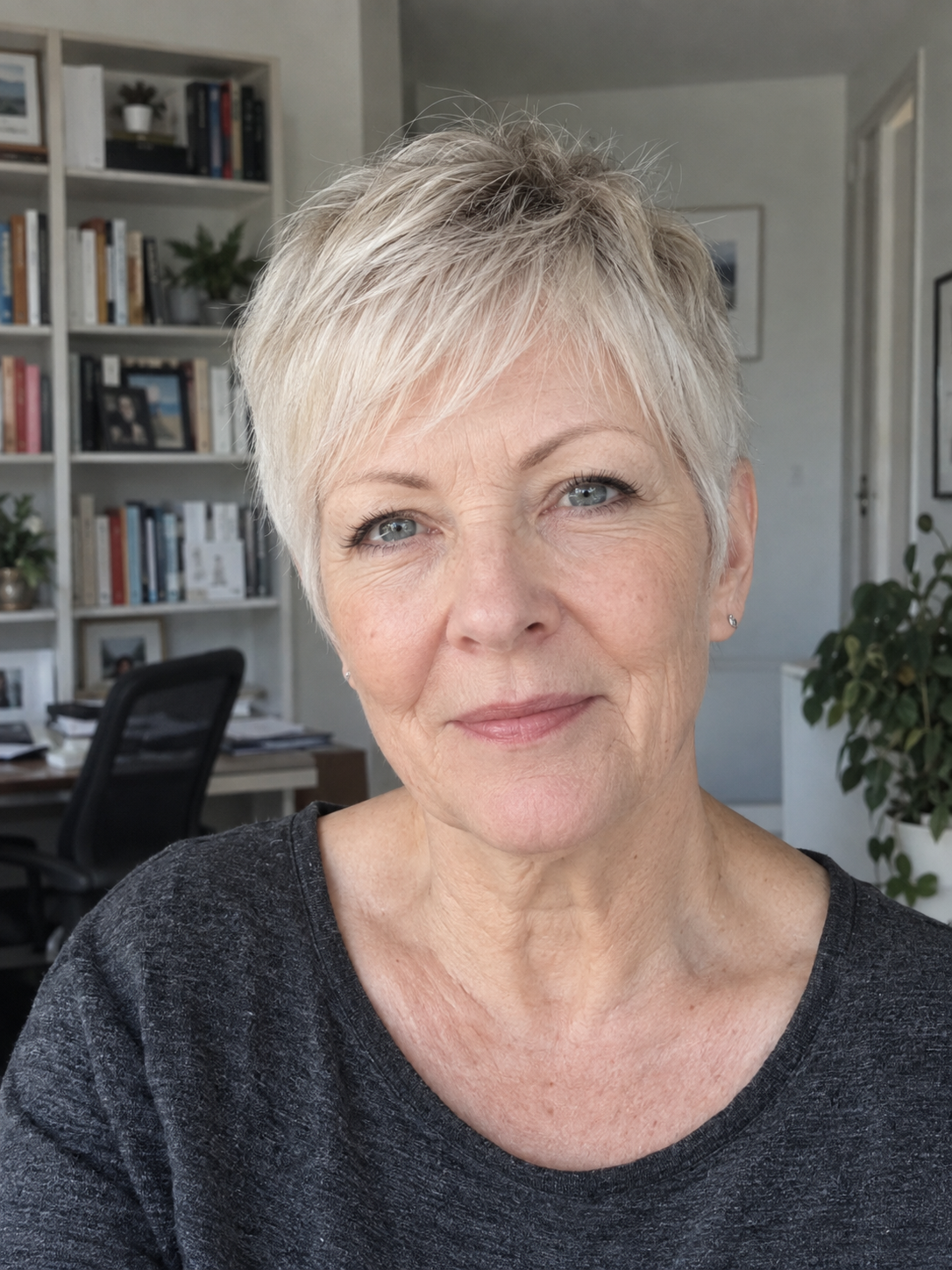
Color can make fine hair look thicker. Bleached to an icy blonde with a slightly darker root left at the crown, a pixie gets a shadow effect at the scalp that hides gaps and makes the top look denser. It works well on natural gray, which blends into the blonde as it grows. Honest note: this needs a toner every six weeks and a purple shampoo at home to stay icy.
Soft Spiky Pixie
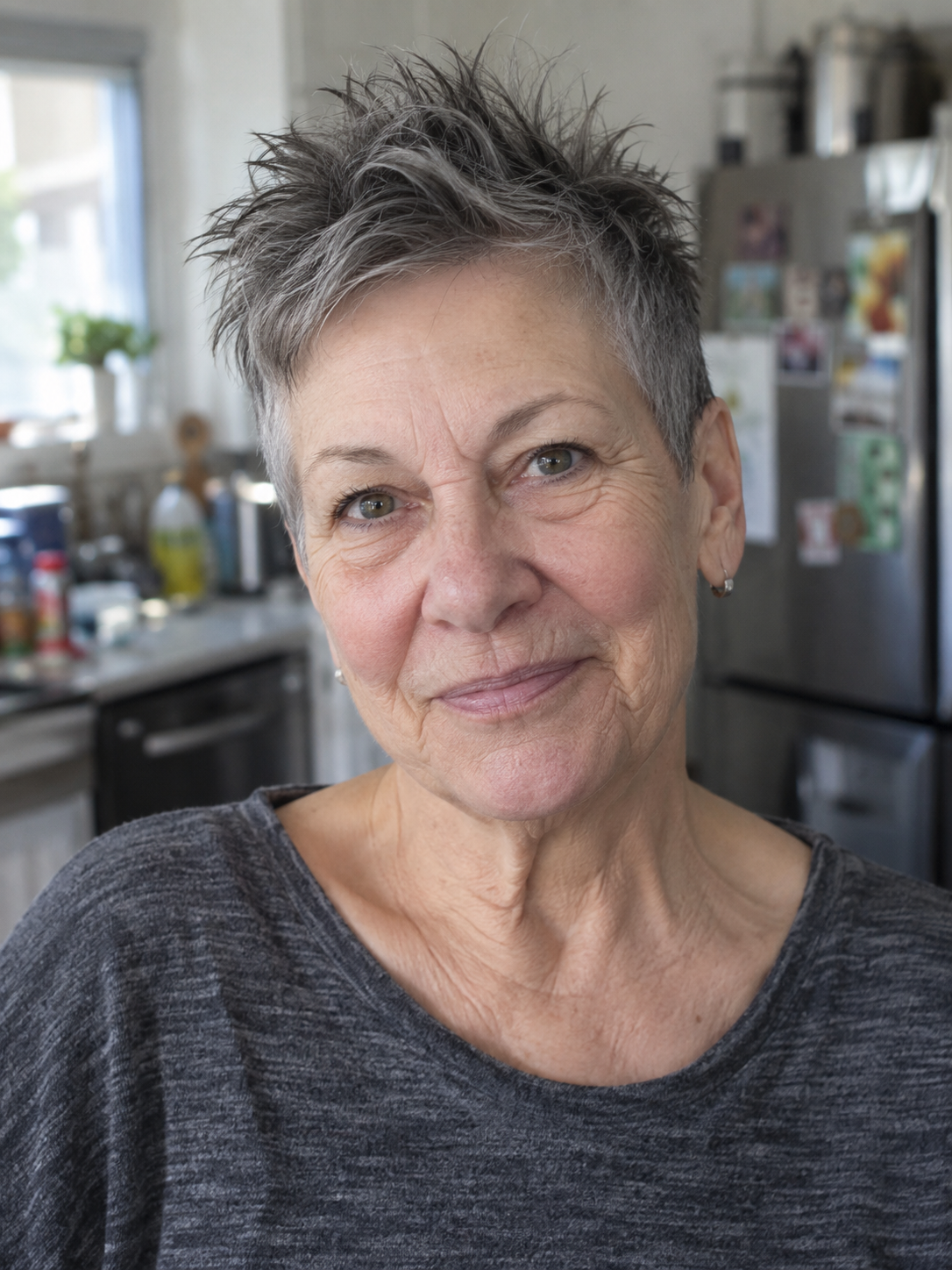
A softer version of the spiky crop, with tight sides and a slightly longer top styled into separated, upward pieces. On fine hair the pieces should be soft and irregular rather than stiff, so use a light paste and pull the top up with your fingertips. It adds height and a bit of attitude, and it is one of the easiest pixies to maintain because there is no shape to preserve, just texture.
Comments
No Comments